
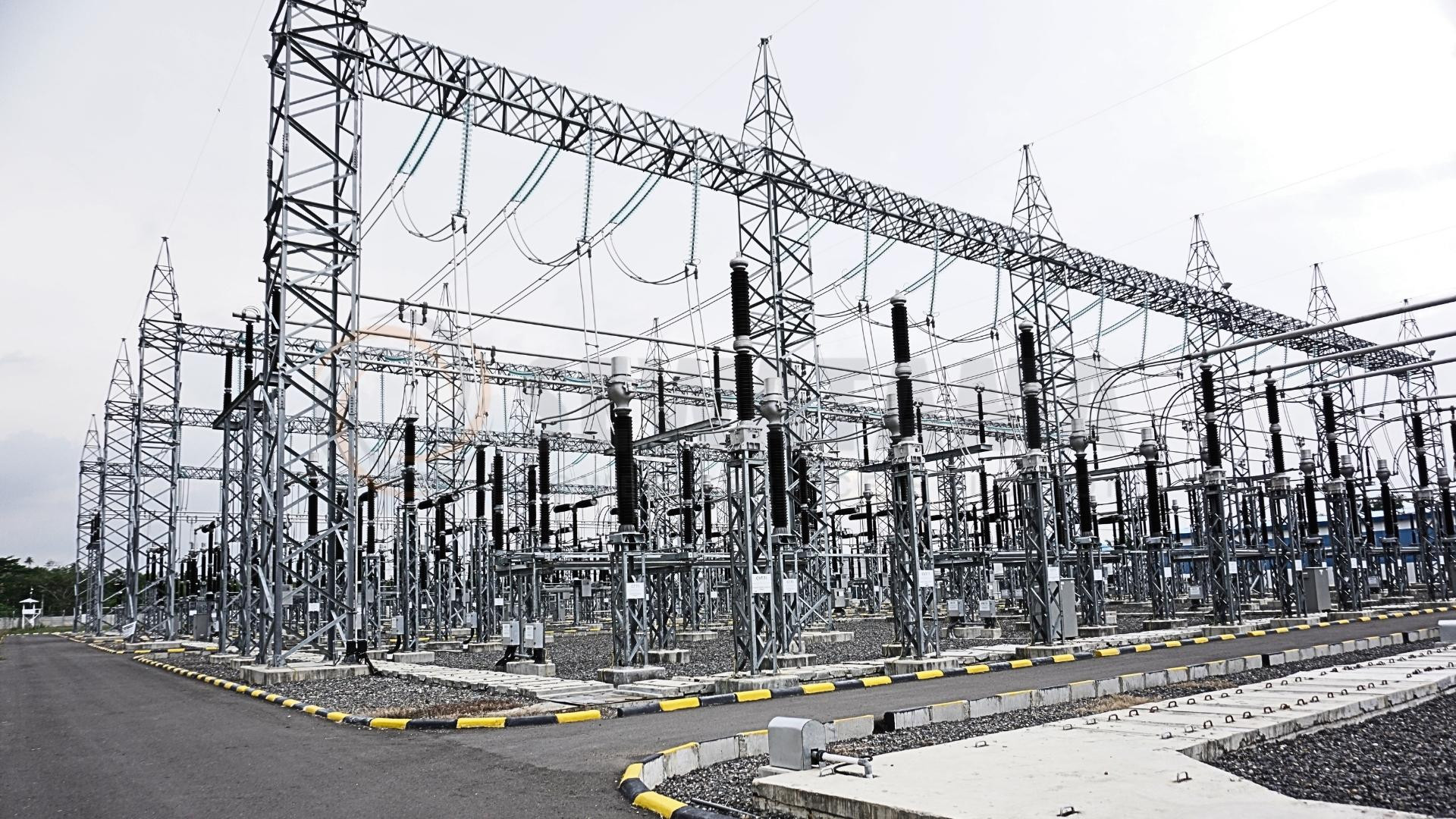
The Role of Generators in Indonesian Electricity Transmission
Recent large-scale power outages across parts of Sumatra and Java have been attributed to disturbances on Indonesia’s High-Voltage Transmission Lines (SUTT) and Extra-High-Voltage Transmission Lines (SUTET), the critical backbone that delivers electricity from generating stations to load centres across the country. Such incidents highlight the complexity of modern power transmission systems: the farther electricity travels, the greater the challenge of managing transmission losses and maintaining grid stability.
In power systems engineering, transmission distance is directly correlated with energy losses. To minimize these losses and ensure efficient power delivery, electricity is transmitted through a hierarchical voltage network in which voltage levels are continuously stepped up and stepped down at different stages of the grid.
Based on their operational function and voltage class, Indonesia’s overhead power network can be broadly categorized into five transmission and distribution systems:
1. LV Overhead Distribution Line (SUTR – Saluran Udara Tegangan Rendah)
This is the electricity network most commonly seen along residential streets and neighborhood roads. Operating at voltages below 1 kV, it ultimately delivers power to end users at the standard utilization voltage of 220 volts for residential applications.
The primary function of the Low-Voltage Overhead Distribution Network (LVODN) is to provide electricity directly to customer premises through household energy meters, making it the final link in the power delivery chain.
2. MV Overhead Distribution Line (SUTM – Saluran Udara Tegangan Menengah)
One level above the low-voltage network is the Medium-Voltage Overhead Distribution Line (MVODL), typically operating within the 1 kV to 35 kV range.
Supported by taller concrete poles, this network serves as the backbone of regional power distribution, transferring electricity from substations to local distribution transformers that step voltage down for residential, commercial, and small industrial consumers.
3. High-Voltage Transmission Line (SUTT – Saluran Udara Tegangan Tinggi)
When power must be transferred across cities, regencies, or wider regional networks, the High-Voltage Transmission Line (HVTL) assumes a critical role.
Supported by lattice steel towers, SUTT systems generally operate within a voltage range of 35 kV to 230 kV. These transmission corridors facilitate bulk power transfer across interconnected grids while maintaining system reliability and voltage stability throughout the network.
4. Extra-High-Voltage Transmission Line (SUTET – Saluran Udara Tegangan Ekstra Tinggi)
SUTET represents one of the primary arteries of Indonesia’s national power system. Tasked with transmitting large quantities of electricity from utility-scale generating facilities—including coal-fired power plants (PLTU), gas engine and gas turbine power plants (PLTMG), hydropower stations (PLTA), and other major generation assets—to major load centers, these lines operate at voltages exceeding 230 kV.
Because of their high operating voltage and power transfer capacity, SUTET structures are significantly larger than conventional transmission towers and are designed with extensive electrical clearances to ensure safety and system integrity.
5. HVDC Transmission System (SUTTAS – Saluran Tinggi Tegangan Arus Searah)
At the forefront of modern transmission technology is the High-Voltage Direct Current (HVDC) Transmission System, known in Indonesia as SUTTAS.
Typically operating at ±250 kV to ±500 kV and beyond, HVDC technology offers exceptional transmission efficiency over long distances. Compared with conventional AC transmission systems, HVDC can significantly reduce transmission losses and is particularly advantageous for transporting bulk power over very long distances and interconnecting geographically separated grids.
As Indonesia advances toward a more integrated and resilient national power network, HVDC technology is expected to play a strategic role in enhancing energy security and improving power accessibility across the archipelago.
The Critical Role of Gensets: More Than Just Backup Power
Given the extensive and complex nature of power transmission and distribution networks described above, fluctuations in voltage and power quality are sometimes unavoidable.
During peak demand periods, the grid may experience voltage sag conditions due to increased loading on specific feeders or substations. This phenomenon, commonly referred to as a brownout or voltage drop, can adversely affect sensitive electrical equipment.
This is where Generator Sets (Gensets) provide significant value beyond their traditional role as emergency backup power sources.
Modern gensets can be configured for parallel operation and grid synchronization, enabling them to supplement utility supply when grid voltage becomes unstable or insufficient. By injecting additional active power into the system, gensets help maintain voltage and frequency within acceptable operating limits.
This capability is particularly important for critical facilities such as manufacturing plants, data centers, hospitals, and other mission-critical operations where power quality is just as important as power availability.
By stabilizing power during periods of grid stress, gensets help protect sensitive equipment, including industrial machinery, server infrastructure, medical devices, and automated control systems, from the risks associated with voltage fluctuations, thereby improving operational reliability and reducing the likelihood of costly downtime.
-------
Writer by Rizka S. Aji, Marketing Communication, PT Sumberdaya Sewatama
Edited by Feldy Martinus Chandra, Engineering Section Head, PT Sumberdaya Sewatama
Related News
Inform Us What You Need
It pleased us to provide you with solution
