
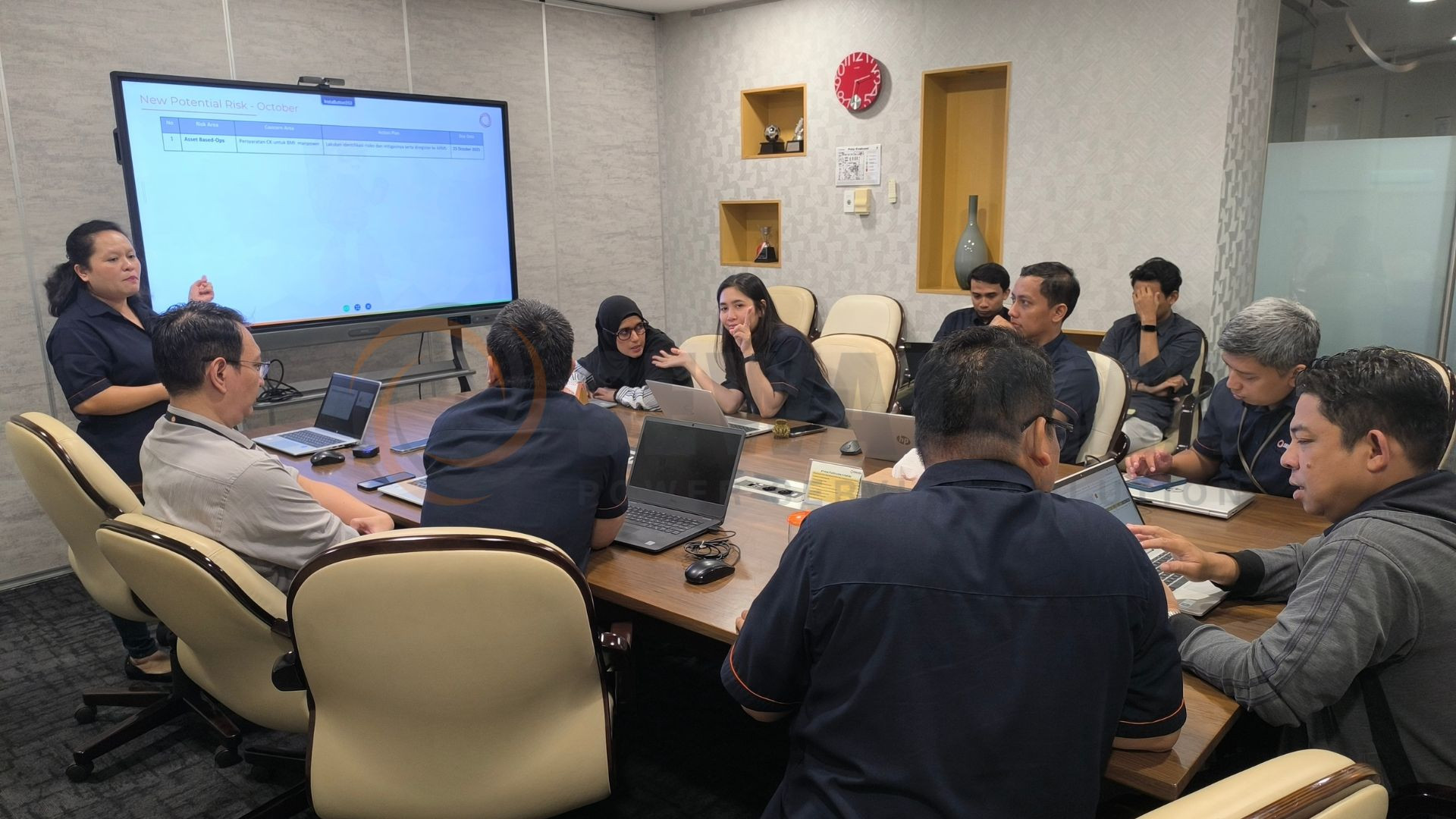
5 Keys to Successful Risk Management
In an increasingly volatile and uncertain business environment, risk is an inherent part of every strategic decision. Organizations that are able to manage risks effectively are not only more resilient but also more agile in seizing opportunities. Implementing a sound risk management framework is therefore not merely a compliance requirement; it is a strategic imperative to safeguard enterprise value and ensure business continuity.
Maya Rosa Nelsari Matondang, ST., QRMP Risk Management Specialist at PT Sumberdaya Sewatama, shares her insights on how to embed a strong risk-aware culture across the organization; one that begins with leadership commitment and extends to every employee as a shared responsibility.
Below are the five key enablers for successful risk management implementation in an organization.
1. Leadership Commitment
Effective risk management starts with risk governance and leadership commitment. When the Board of Directors and senior executives actively champion risk management, it sets a powerful tone that shapes organizational behaviour and accountability.
Leadership involvement should not be symbolic; it must be demonstrated through clear direction, resource allocation, and integration of risk considerations into strategic planning and operational decision-making. A visible and consistent tone at the top reinforces the message that risk management is everyone’s responsibility, not just the Risk Department’s.
2. Education and Capacity Building
Building risk awareness and risk competency across all organizational levels is a critical element in fostering a sustainable risk culture. Through structured training, workshops, and knowledge-sharing sessions, employees can develop a clear understanding of the company’s risk appetite and risk tolerance, as well as the framework for risk identification, risk assessment, risk treatment, and mitigation actions to be taken.
This collective understanding cultivates risk ownership at every level, ensuring that risk management principles and processes are fully integrated into all business activities and decision-making across functions and operational areas.
3. Clear Procedures and Effective Communication
A robust risk management policy and procedure framework provides consistency and clarity in execution. Every process, from risk identification, assessment, mitigation, to monitoring, must be properly documented, communicated, and aligned with the company’s overall risk governance structure.
Equally important is maintaining open and transparent communication. Employees should feel empowered to escalate potential risks, near misses, or control weaknesses without fear of reprisal. Transparent communication enhances early risk detection and fosters proactive decision-making across all business units.
4. Data and Technology
Data-driven decision-making is now at the heart of modern enterprise risk management (ERM). Leveraging technology enables real-time risk reporting, trend analysis, and predictive analytics that help anticipate emerging risks before they materialize.
By integrating risk data into digital dashboards or centralized reporting systems, management can evaluate control effectiveness and prioritize mitigation actions based on quantifiable insights. This risk intelligence approach allows the organization to move from reactive to proactive risk management.
5. Recognition and Continuous Improvement
Sustaining a risk-aware culture requires reinforcement and continuous improvement. Recognizing teams or individuals who demonstrate proactive risk behaviour, such as identifying potential exposures or improving control measures, helps institutionalize positive practices across the company.
Risk management is not a one-time initiative; it is a continuous improvement cycle that evolves alongside business dynamics. Through consistent leadership support, structured capability building, and organization-wide engagement, companies can strengthen resilience and sustain long-term value creation.
Related News

Inform Us What You Need
It pleased us to provide you with solution
