
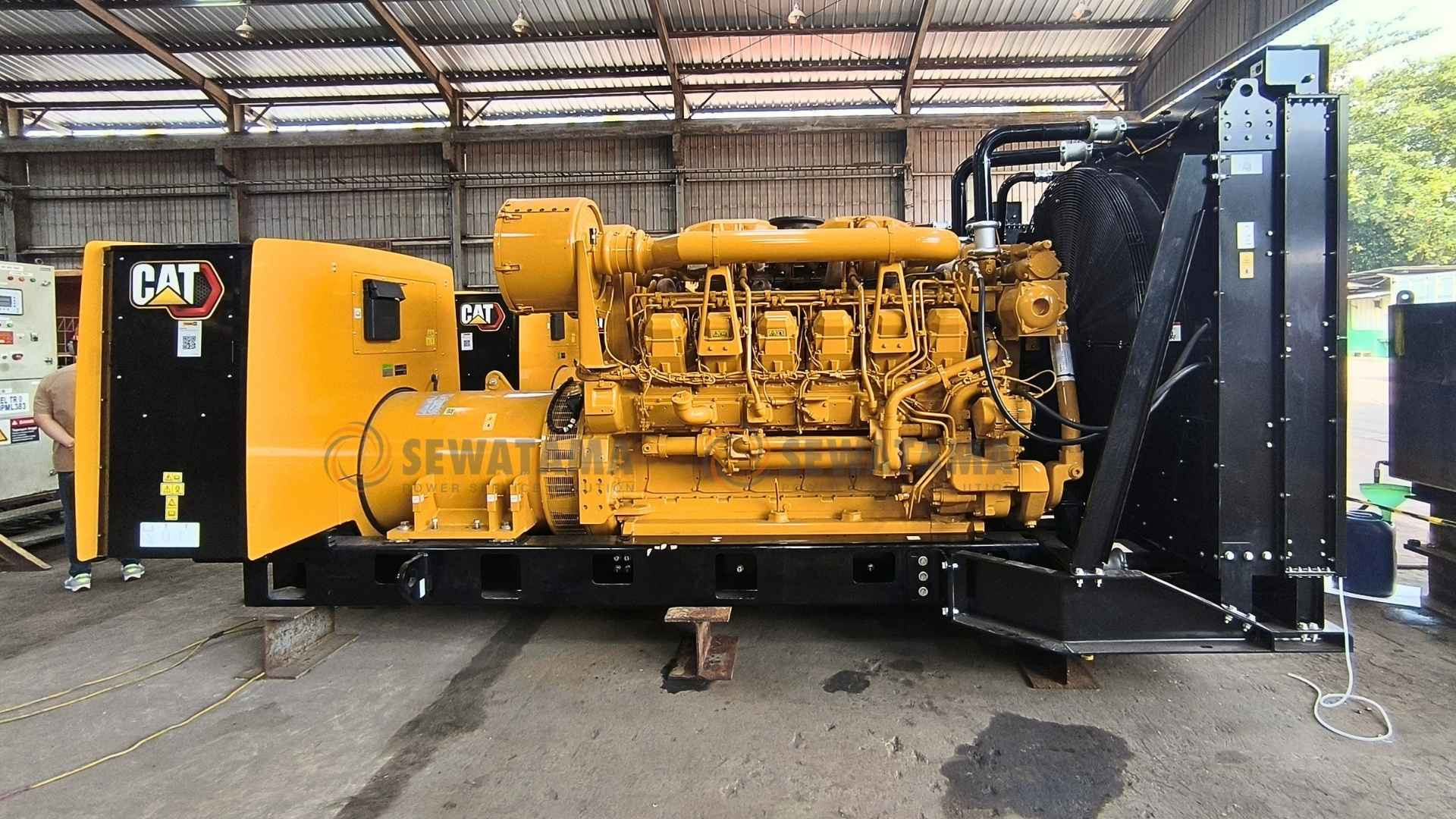
Which Genset Fits Your Operation?
Across a wide range of industries, generator sets (gensets) play a critical role in ensuring power reliability, whether serving as a primary power source (base load/prime power) or as an emergency backup supply. However, not all gensets are engineered for the same operating requirements. One of the key technical considerations when selecting a genset is understanding its engine speed classification to ensure the most suitable application.
Based on engine rotational speed (RPM), diesel generator sets are generally categorized into three groups: low-speed, medium-speed, and high-speed diesel engines.
As engine speed increases, the engine tends to become lighter, more compact, and easier to transport. However, internal components are subjected to higher mechanical stresses and wear rates. Lower-speed engines, on the other hand, are built for durability, continuous operation, and extended service life, although they typically require a higher initial capital investment.
High-Speed Generator Sets (1,500 - 3,000 RPM)
High-speed gensets are the most commonly deployed units across various industries. They are widely used for standby power applications in commercial buildings, as well as temporary power solutions for construction and infrastructure projects.
Key Characteristics
1. Compact and lightweight design, making transportation and site mobilization easier.
2. Lower initial capital expenditure (CAPEX).
3. Well-suited for standby, emergency, or intermittent operating profiles.
4. Requires more frequent maintenance intervals, with the first major overhaul typically occurring within approximately 12,000 to 20,000 operating hours.
Typical Applications
1. Standby and emergency backup power for office buildings, hospitals, and commercial facilities.
2. Temporary power supply for construction sites and infrastructure projects.
3. Event and rental power applications requiring frequent mobilization.
4. Power support for telecommunications infrastructure, including Base Transceiver Stations (BTS).
Medium-Speed Generator Sets (750 - 1,000 RPM).
Medium-speed gensets are designed for heavy-duty industrial applications where reliability, durability, and continuous operation are critical requirements. These engines feature a significantly more robust construction and a substantially longer operational lifespan.
Key Characteristics
1. Heavy-duty engine design engineered for continuous-duty and baseload operation.
2. Higher upfront investment, but a lower total cost of ownership (TCO) over the asset lifecycle.
3. Extended overhaul intervals, typically ranging from 40,000 to 60,000 operating hours.
4. Superior fuel efficiency when operating under high-load conditions for prolonged periods.
5. Enhanced reliability and availability for mission-critical operations.
Typical Applications
1. Prime power generation for manufacturing plants operating around the clock.
2. Mining operations in remote locations beyond the reach of the national power grid.
3. Captive power plants serving large-scale industrial facilities.
4. Mission-critical facilities where unplanned downtime is unacceptable, such as data centers and strategic industrial operations.
Selecting the Right Generator Technology
The decision between a high-speed and medium-speed genset should not be based solely on power output requirements (kVA rating). Equal consideration must be given to the operating profile, duty cycle, load characteristics, and expected running hours.
A properly matched genset solution can significantly improve operational efficiency and reduce lifecycle costs. Conversely, operating a genset outside its intended duty profile can lead to premature wear, increased maintenance costs, reduced fuel efficiency, and shortened equipment life. For example, a high-speed generator continuously operating under 24/7 baseload conditions may experience accelerated degradation and higher long-term operating costs.
For this reason, selecting the most appropriate generator technology requires a thorough understanding of both technical requirements and site operating conditions.
With more than 30 years of experience as an integrated power solutions provider in Indonesia, Sewatama has supported a broad range of industries, including mining, oil and gas, manufacturing, construction, and industrial estates, delivering reliable and application-specific power solutions tailored to each customer's operational needs.
Sewatama provides rental power solutions with generator capacities ranging from 1,000 kVA to 2,000 kVA, supported by experienced technical specialists who can help determine the most effective power configuration for any application, whether for temporary backup requirements or long-term prime power generation.
By: Arun Gumilang
Editor: M. Fauzan, Product Engineering, PT. Sumberdaya Sewatama
Related News
Inform Us What You Need
It pleased us to provide you with solution
