
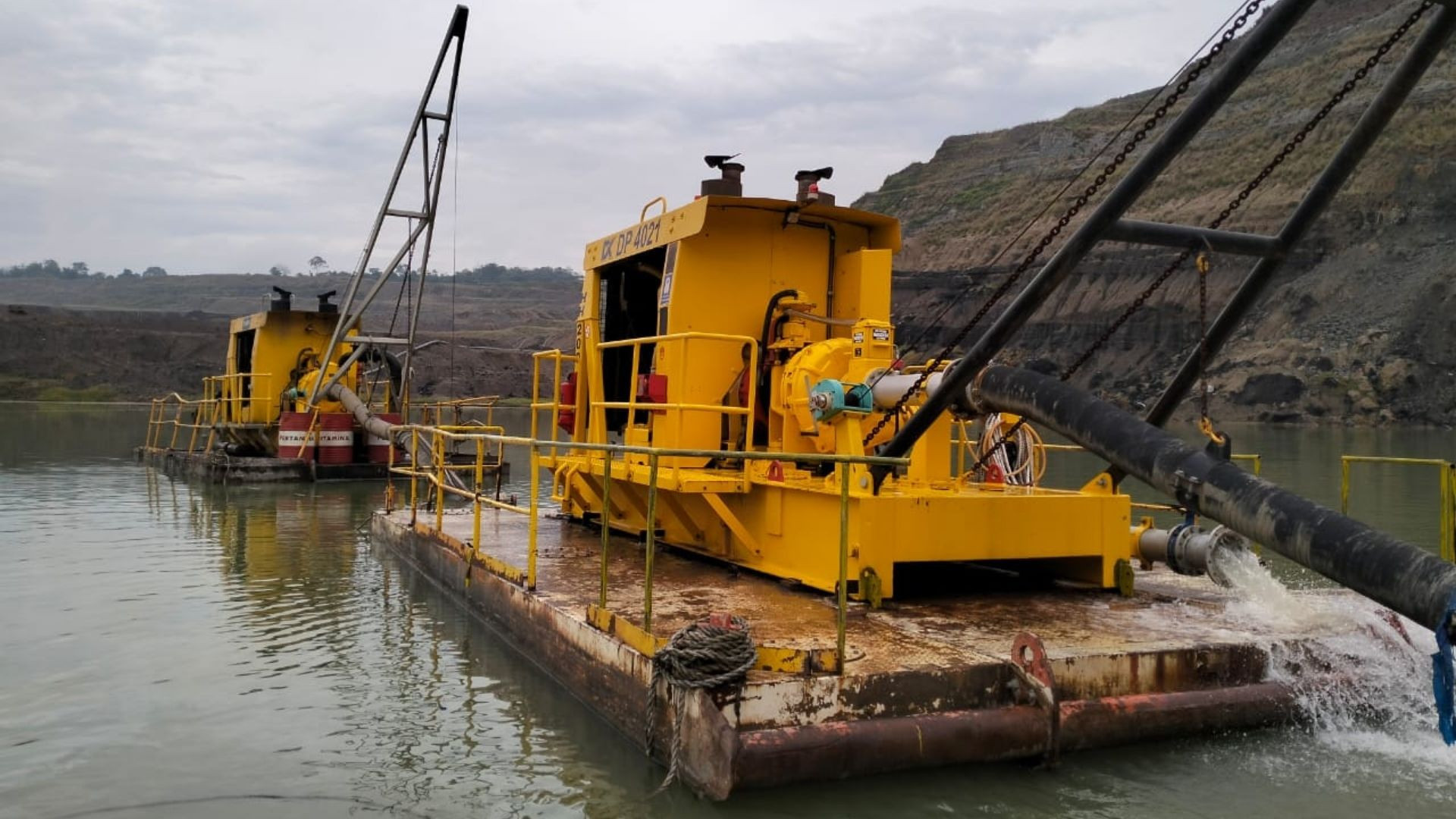
Mining Dewatering Pumps vs Seawater Pumps: What’s the Difference?
At first glance, industrial pumps may look quite similar. Their overall design, configuration, and accessories often appear identical. However, when examined more closely, dewatering pumps used in different industries are designed with distinct specifications and operating characteristics.
The primary reason lies in the nature of the fluid being pumped. In mining operations, dewatering pumps are typically used to handle a mixture of rainwater, groundwater, and mine runoff containing suspended solids such as mud, sand, silt, and excavated material. This water is often abrasive, contaminated, and can be mildly acidic, especially in certain mining environments. As a result, mining dewatering systems must be capable of handling high solids content and severe wear conditions.
By contrast, pumps used for seawater applications must withstand continuous exposure to seawater with a high salt concentration (salinity of approximately 35,000 ppm). In these applications, the main challenges are: Corrosion caused by chloride-rich seawater, Erosion from suspended particles and high flow velocities, Fouling due to scale formation and marine organism growth.
Because the operating environments are fundamentally different, the materials used in pump construction must also differ. Mining pumps are commonly manufactured from wear-resistant materials such as: High-chrome white iron alloys (20-25% Cr); Natural rubber linings; Stainless steels (304, 316, and Duplex grades).
Critical hydraulic components, particularly the impeller and casing liners, are engineered for superior hardness and abrasion resistance to withstand continuous exposure to sand, slurry, and other abrasive solids.
Seawater pumps, on the other hand, are typically fabricated from highly corrosion-resistant materials, including: Duplex stainless steel, Super Duplex stainless steel, Nickel Aluminium Bronze (NAB).
Conventional carbon steel or cast iron is generally unsuitable for long-term seawater service because it corrodes rapidly when exposed to a marine environment.
Their operating configurations also tend to differ.
Mining dewatering pumps are available in several configurations depending on site requirements. Some are installed directly in flooded areas as submersible pumps, while others operate on the surface as centrifugal dewatering pumps. Selecting the appropriate pump type is critical because an incorrect selection can lead to premature failure, reduced efficiency, and increased operating costs.
Seawater pumps are most commonly designed as centrifugal pumps with larger hydraulic passages. They are frequently utilized as:
1. Intake pumps supplying raw seawater to water treatment plants
2. Cooling water pumps for heat exchangers at coal-fired power plants and other industrial facilities
3. Feed pumps for desalination systems that produce freshwater from seawater
Fundamentally, both mining and seawater pumps operate on the same hydraulic principle. Water enters the pump through the suction side, and a rotating impeller imparts energy to the fluid, discharging it at a higher pressure. The key difference lies in how robustly the pump components are engineered and what environmental conditions they are designed to withstand.
Therefore, before renting or selecting a dewatering pump, consider the following five key factors:
1. Understand the Water Characteristics: Determine whether the fluid is abrasive and potentially acidic, such as mine water, or highly saline, such as seawater. Fluid characteristics are the most important factor in pump selection.
2. Verify the Pump Materials: Ensure that the pump materials are specifically engineered for the intended service. A general-purpose pump may not provide adequate resistance to abrasion, corrosion, or both.
3. Match the Pump to the Installation Environment: Consider whether the pump will operate as a submersible unit, a surface-mounted pump, or a marine-installed system. Installation conditions significantly affect pump performance and service life.
4. Check Capacity and Pumping Requirements: The required flow rate, total dynamic head, and solids-handling capability must match the application's demands. Higher volumes of water, slurry, or sediment generally require larger and more robust pumping equipment.
5. Plan for Maintenance: Even the highest-quality pump requires routine inspection and maintenance. This is especially important in harsh operating environments such as mining sites and marine applications, where wear, corrosion, and fouling can significantly reduce equipment life if left unmanaged.
By Arun Gumilang
Edited by Agus Wijayanto, Product Application Engineering, PT Sumberdaya Sewatama
Related News

Inform Us What You Need
It pleased us to provide you with solution
