
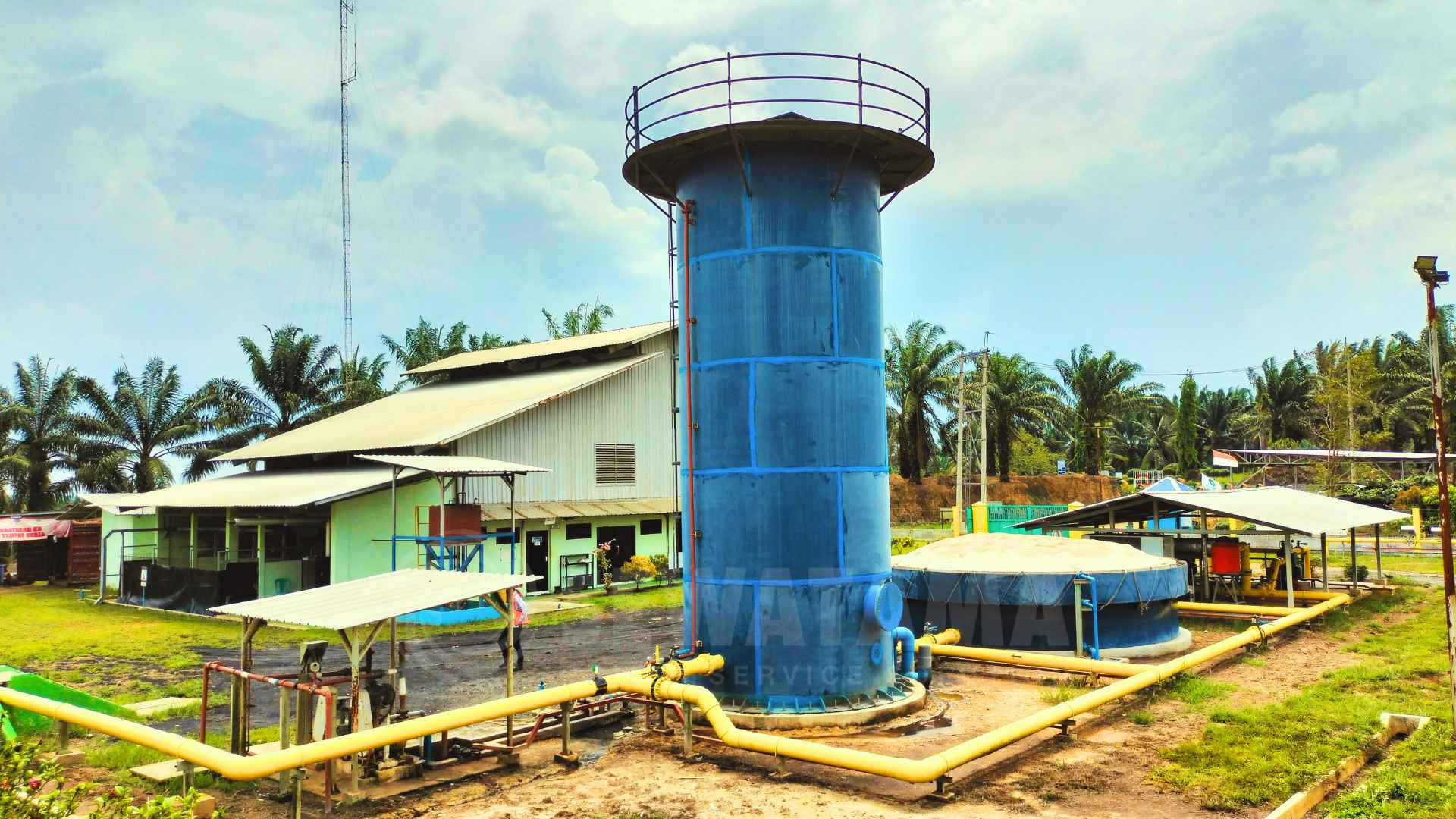
POME Biogas Development: The Challenge Is No Longer Technology
As the global energy sector accelerates its transition toward low-carbon solutions, Indonesia's palm oil industry is uniquely positioned to contribute to the renewable energy landscape. One of its most promising resources is Palm Oil Mill Effluent (POME), a liquid by-product generated during crude palm oil (CPO) production.
For years, discussions around POME-to-biogas projects have focused primarily on their energy potential. However, as technologies mature and industry experience deepens, the conversation is shifting. The more relevant question today is no longer whether POME can be converted into energy, but how biogas projects can consistently deliver long-term operational, economic, and environmental value.
For palm oil producers, POME utilization is no longer merely a waste management initiative. Increasingly, it is being recognized as a strategic energy solution capable of improving operational efficiency while supporting broader sustainability objectives.
Indonesia's Untapped POME-to-Biogas Potential.
Indonesia possesses a strong foundation for scaling up POME-based biogas development. According to data from the Directorate General of Estates and GAPKI, the country had approximately 16.83 million hectares of oil palm plantations and produced around 51.7 million tonnes of CPO in 2025. With more than a thousand palm oil mills operating nationwide, Indonesia is estimated to generate roughly 155 million cubic meters of POME annually.
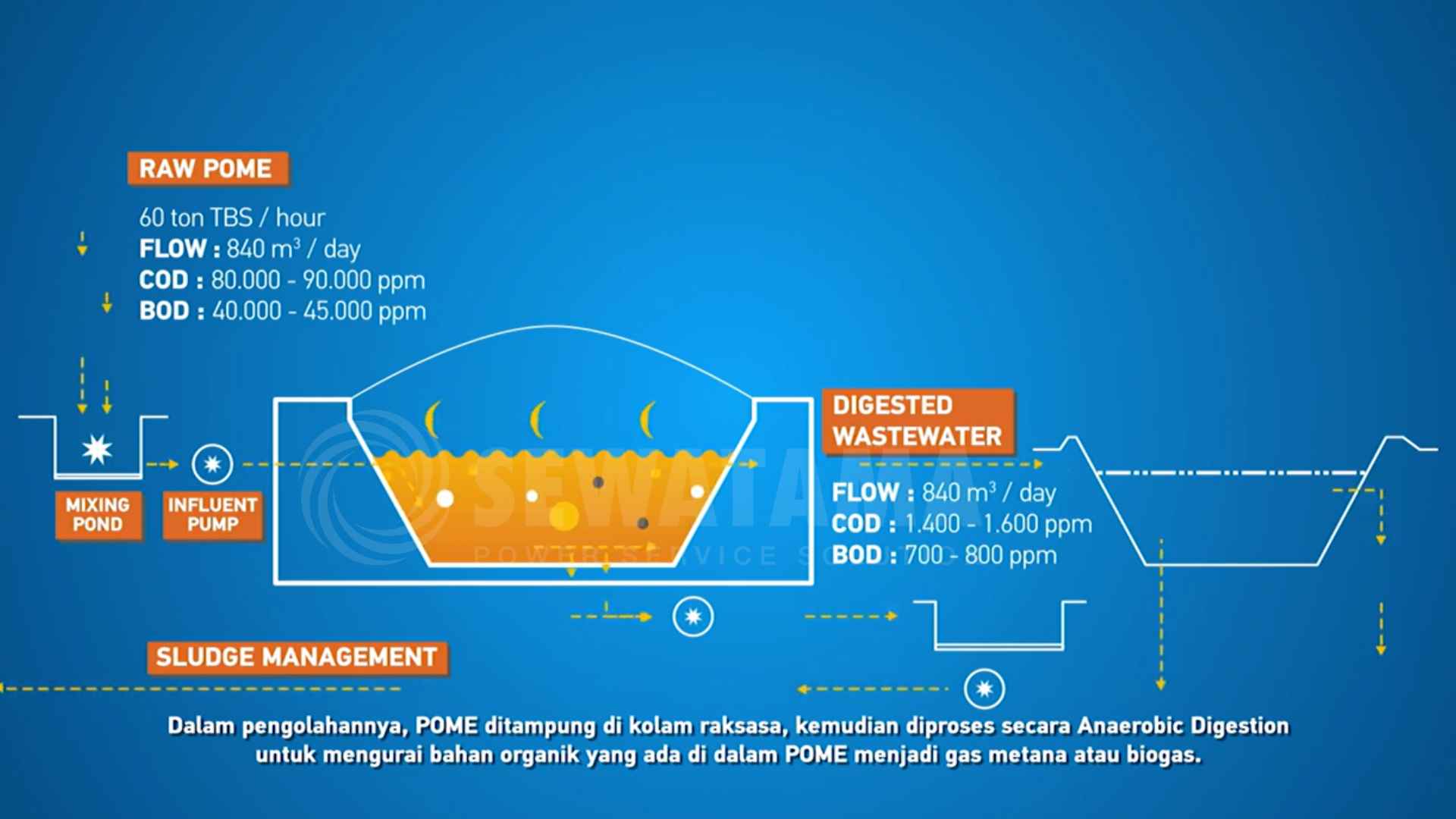
This volume represents one of the country's most significant sources of renewable energy feedstock. Due to its high organic content, POME is highly suitable for anaerobic digestion, producing biogas rich in methane that can be utilized as a reliable energy source.
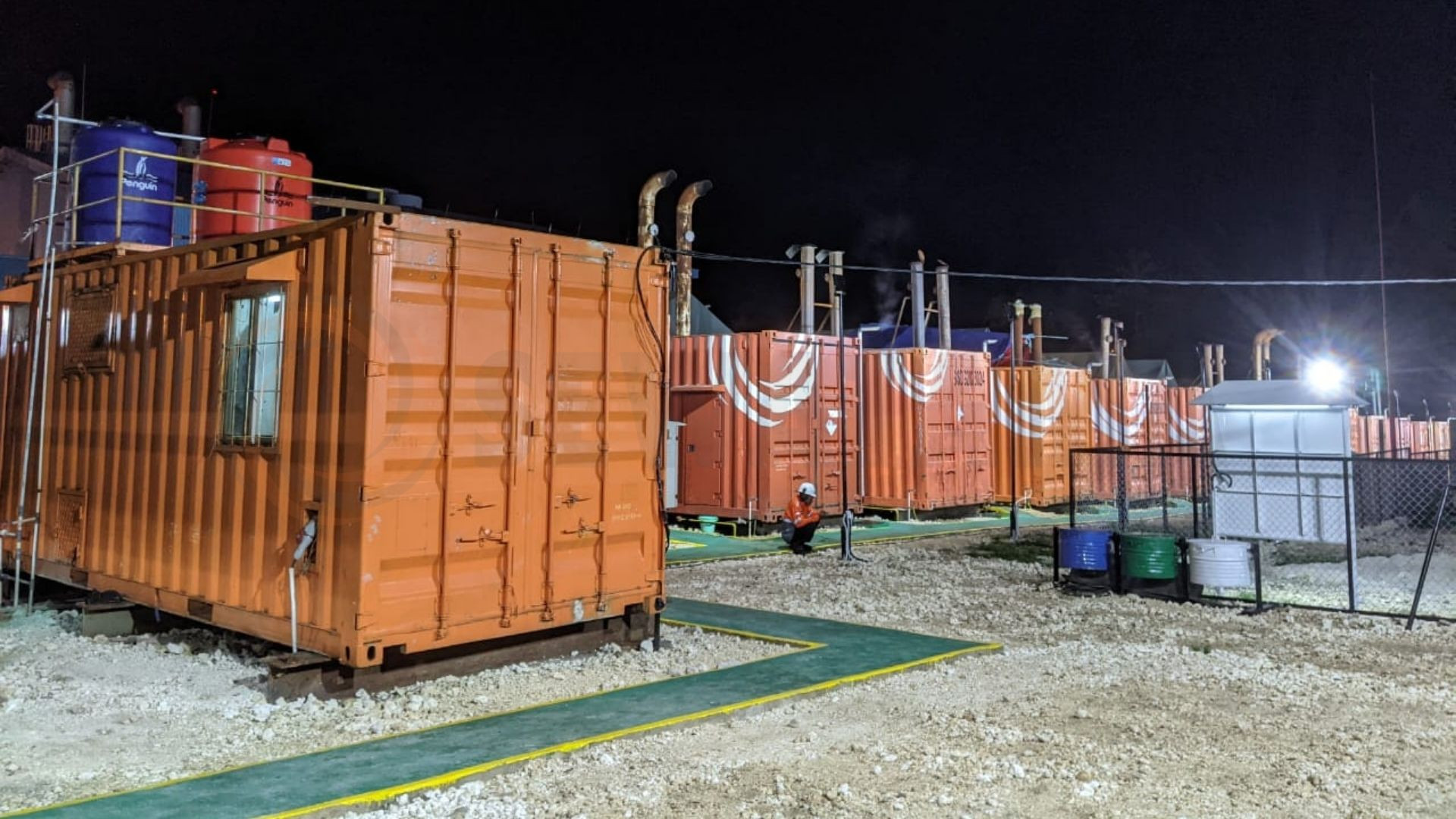
Today, biogas derived from POME is being deployed across a range of industrial applications, including fuel for gas engine power generation, Bio-CNG production for industrial energy use, and boiler co-firing systems. These developments demonstrate that POME has evolved from a process waste stream into a valuable energy resource with tangible commercial value.
As part of this growing ecosystem, PT Sumberdaya Sewatama, through its subsidiary PT Nagata Bisma Shakti, has been actively developing biogas projects under both Engineering, Procurement and Construction (EPC) and Build-Operate-Transfer (BOT) schemes. The company is currently involved in the development and operation of biogas power plants in partnership with several palm oil mills in South and Central Kalimantan.
(CLICK VIDEO BELOW)
Why Have Many POME Biogas Projects Not Reached Their Full Potential?
Considering the scale of the opportunity, a question frequently raised by industry stakeholders is why POME-based biogas adoption has not progressed as rapidly as expected.
Based on practical experience, the primary challenge is no longer technology availability. The more significant barriers relate to project financing, investment decisions, human capital, and the ability to sustain reliable plant performance over the long term.
Methane capture facilities and biogas power plants require considerable upfront investment. At the same time, mill owners must balance multiple capital priorities that directly support their core business operations. As a result, energy projects often compete with other strategic investments for financial resources and management attention.
Operational readiness presents another challenge. Successful biogas projects require disciplined operational management, preventive maintenance practices, and continuous process optimization to ensure stable gas production and energy output. These factors often determine project success long after the construction phase has been completed.
Project Success Depends on Operations, Not Technology Alone
One of the most important lessons learned from the biogas industry is that technology is no longer the differentiating factor.
Technologies such as Covered Lagoons, Continuous Stirred Tank Reactors (CSTR), Anaerobic Filters, and Upflow Anaerobic Sludge Blanket (UASB) systems have all demonstrated their ability to effectively convert POME into biogas. The greater challenge begins once the facility enters commercial operation.
Biogas production is highly dependent on the quality and quantity of POME entering the system. Variations in mill throughput, fluctuations in wastewater characteristics, and operational discipline can all directly influence gas yield and overall plant performance.
For this reason, project success is not defined solely by engineering design or construction quality. Long-term value creation depends on the ability to operate, maintain, and optimize the facility throughout its lifecycle, ensuring that expected energy and environmental benefits are consistently achieved.
In this context, operational expertise becomes just as important as engineering capability. As industrial energy demands and sustainability targets become more sophisticated, the need for professional and integrated energy asset management continues to grow.
The Future of POME Biogas as a Strategic Energy Asset
Looking ahead, the strategic value of POME-based biogas is expected to increase significantly. Beyond renewable energy generation, POME utilization contributes to methane emissions reduction, supports decarbonization efforts, and strengthens circular economy practices within the palm oil industry.
At the same time, sustainability expectations from customers, investors, and global supply chains continue to rise. Environmental, Social, and Governance (ESG) performance is increasingly influencing business decisions across industries. Consequently, biogas projects are no longer viewed solely as wastewater treatment infrastructure, but as strategic assets that can enhance competitiveness and resilience.
Indonesia's palm oil sector already possesses three critical ingredients needed to accelerate biogas development: abundant feedstock, proven technologies, and growing market demand.
The challenge ahead is no longer identifying the opportunity. It is about accelerating implementation in a commercially viable and sustainable manner.
For industry players, the most relevant question today is not whether POME-based biogas is worth developing, but how to ensure that its development delivers meaningful value for both business performance and environmental stewardship.
Viewed through this lens, POME is no longer a waste stream to be managed. It is a strategic energy asset capable of supporting energy security, sustainability commitments, and the long-term competitiveness of Indonesia's palm oil industry.
By Murni Marbun, Project Manager, Biogas EPC, PT. Sumberdaya Sewatama
Experienced in the development and operation of biogas plants since 2008
Related News

Inform Us What You Need
It pleased us to provide you with solution
