
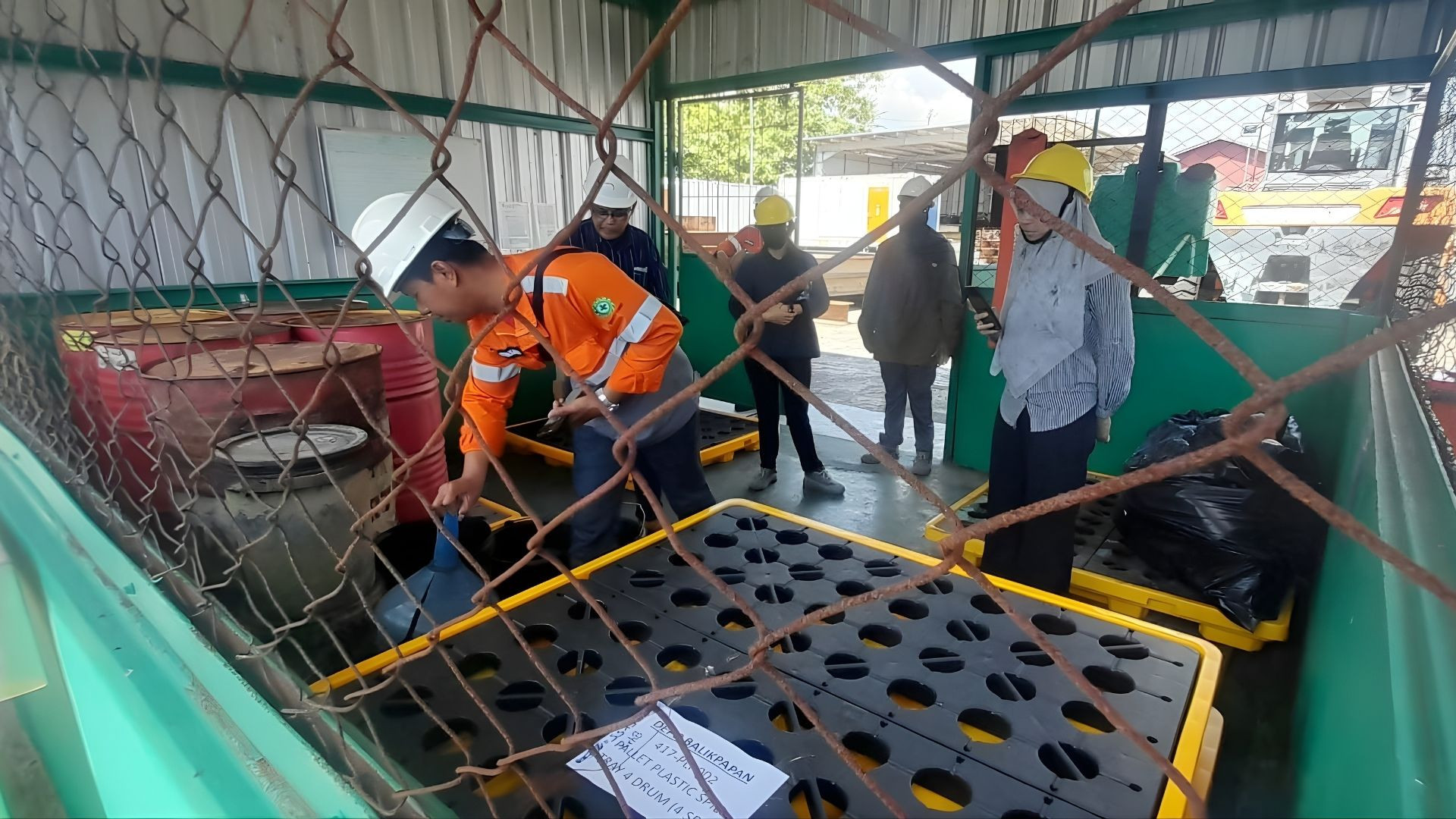
SMK3: The Backbone of Operational Excellence
In today’s industrial landscape, workplace safety is no longer a "nice-to-have": it is non-negotiable. The Occupational Health and Safety Management System (SMK3) serves as the "heartbeat" of risk mitigation, ensuring that every operation is not only safe and healthy but also sustainable in the long term.
Recognizing that safety is paramount, the Indonesian government codified SMK3 through Government Regulation (PP) No. 50 of 2012. This mandate integrates OHS into the very fabric of corporate management. Its core mission? To transform the workplace into a safe, efficient, and high-performing environment.
Who needs to step up? In short, any company operating on Indonesian soil is subject to this regulation. This is especially critical for firms with 100+ employees or those operating in "high-stakes" environments. We live by one golden rule: High Risk, High Control.
Building a Robust Safety Framework
Implementing SMK3 isn't a "quick fix" or a "box-ticking exercise." It is a journey built on the PDCA (Plan-Do-Check-Act) cycle. To truly walk the talk, companies must execute several strategic moves:
1. Internal Groundwork: This is where the foundation is laid. It’s about drafting OHS policies, establishing the P2K3 (OHS Committee), and "upskilling" the workforce. Per the latest 2025 regulations, the P2K3 has been elevated to a strategic powerhouse where management and workers join forces to call the shots on safety.
2. Internal Audit: The Reality Check Led by certified auditors, this mandatory phase isn't about "fault-finding," it’s about "fact-finding." It serves as a corrective action & preventive action plan, identifying gaps and "red flags" before they escalate into "boots-on-the-ground" incidents.
3. External Audit: The Ultimate Stress Test Conducted by government-authorized bodies, this involves a deep dive into documentation and a rigorous field verification. The goal? To see where you stand on the scale, aiming for that "Satisfactory" gold standard.
4. Certification: The Badge of Honor. Passing the audit grants a company the SMK3 Certificate and the OHS Flag. Beyond compliance, this is a massive competitive edge—it’s a signal to clients and partners that you take your "Duty of Care" seriously during high-stakes tenders.
PT Sumberdaya Sewatama: Leading by Example
Putting theory into practice, PT Sumberdaya Sewatama recently knocked it out of the park, passing the Advanced Category External Audit with a stellar 93.37% (Satisfactory) score. This proves that at Sewatama, safety isn't just a poster on the wall—it’s a living, breathing culture.
As the saying goes in our industry: "A strong safety culture is the leading indicator of operational excellence." By maturing their SMK3, companies do more than protect their people; they future-proof their business.
Because at the end of the day, there is only one KPI that truly matters: Everyone goes home safe.
By: Dalilah Alkatiri, Corporate OHS Officer PT Sumberdaya Sewatama
Related News
Inform Us What You Need
It pleased us to provide you with solution
